Palembang sits on the banks of the Musi River and holds a long history, from a market said to have operated since 1662 to the site of the sultanate's former palace. The history of the Palembang Sultanate, its historic mosques, the tombs of its scholars, and its famous fish-based dishes make the city appealing to Muslim travellers. This guide covers the mosques and historic sites worth visiting, the local food, and the things you should check yourself.
One note up front: "halal travel" here means destinations that are friendly to Muslim families, not a claim of halal certification. We did not find halal certification details for any eatery or dish on this list.
Mosques and Religious Sites
Great Mosque of Palembang
This mosque was founded during the reign of Sultan Mahmud Badaruddin I Jayo Wikramo. According to a detikSumbagsel report (January 2026), construction began in 1738 and it was inaugurated on 26 May 1748, taking about ten years. It was originally called Masjid Sultan, and it stands north of the former palace site, near the Musi River. Its architecture is described as blending Indonesian, Chinese, and European elements. Besides being a place of worship, it was once a centre of Islamic study and is often called the oldest mosque in Palembang.
Al Islam Cheng Ho Sriwijaya Mosque
This mosque in the Jakabaring area is designed like a traditional Chinese house, with two towers named Habluminallah and Habluminanas. The building has five levels, said to represent the five daily prayers. Its name honours Admiral Cheng Ho, the Chinese Muslim sailor associated with the spread of Islam in places he visited.
Kiai Muara Ogan Mosque and the Scholars' Tombs
This mosque in Kertapati, on the edge of the Musi River, can be reached by land or by river. Nearby is the cemetery of Palembang scholars that visitors come to see. A local tourism official compared the figures buried there to the wali of Java.
Giant Quran Museum (Al Quran Al Akbar)
In Gandus, this museum displays a Quran carved on large wooden panels, using more than 40 cubic metres of trembesi wood at a cost of about Rp2 billion. It is described as one of the largest in mushaf form. We did not find opening hours or fees, so ask before visiting.
Kawah Tengkurep and Sabo Kingking Tombs
The Kawah Tengkurep tomb was built in 1728 during the reign of Sultan Mahmud Badaruddin I. Its name comes from the shape of its domed roof, which resembles an overturned cauldron. Sabo Kingking is described as the oldest graves of early Palembang's rulers. Both sites are recommended for visitors interested in the descendants of the Palembang Sultanate.
Other Historic Sites
Sultan Mahmud Badaruddin II Museum
Beside the Musi River and Benteng Kuto Besak, this museum stands on the site of the former Kuto Besak palace. The palace was destroyed in 1821, and around 1823 a residence for a Dutch official was built on the same spot. It is now a museum showing collections from the sultanate and colonial periods.
Ampera Bridge and Pasar 16 Ilir
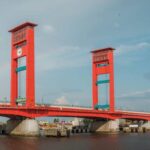
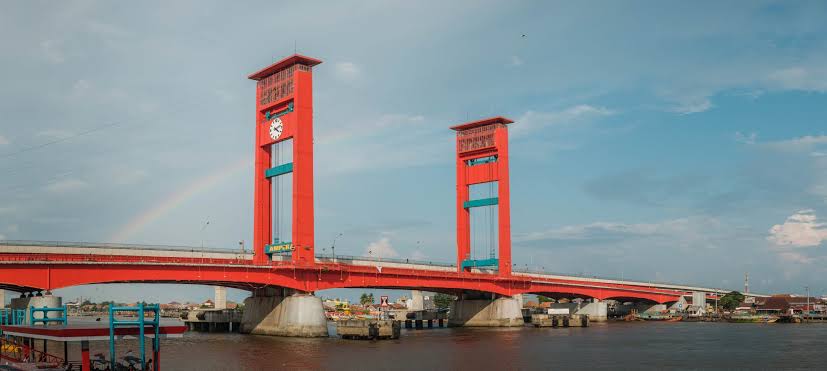
The Ampera Bridge connects Seberang Ilir and Seberang Ulu, and the idea for it is said to date from 1906. It was only realised after independence, with President Soekarno's approval. Pasar 16 Ilir is said to have operated since 1662 and remains a shopping destination for residents and tourists.
Kemaro Island
This island in the middle of the Musi River has the Hok Ting Rio temple, established in 1962 according to a detik report. It is busy during Cap Go Meh and Chinese New Year. For Muslim travellers, it is best viewed as a cultural and historical site.
Palembang's Signature Food
Good News From Indonesia (August 2026) lists several typical dishes:
- Pindang patin, patin fish in a yellow broth with lemongrass, salam leaves, starfruit, and tomato.
- Mie celor, thick noodles in a thick shrimp-broth gravy with fried shallots and sliced boiled egg, usually eaten in the morning.
- Tekwan, a small, unfilled fish dumpling served with vermicelli and wood ear mushrooms.
- Model, a larger version of tekwan with a small white tofu filling.
- Laksan and celimpungan, coconut-milk dishes with different shapes: laksan is long and oval, celimpungan rounder and softer.
- Es kacang merah, a dessert drink of boiled red beans, pandan leaves, and sweetened condensed milk.
Pempek is also mentioned as a comparison, served with cuko sauce. The source article names no eateries and gives no halal status, so we do not recommend particular places and make no certification claim. For processed dishes like pempek and tekwan, ask about ingredients, especially additives and sauces.
Practical Tips
First, plan around prayer times. Places like Jakabaring, Kertapati, and Gandus are on different sides of the city from the historic centre, so decide where you will pray Dhuhr and Asr first. Second, on food: BPJPH says mandatory halal certification for food and beverage products from micro and small businesses applies from 18 October 2026, with no postponement (statement by BPJPH's head, June 2026). We did not find reports on how it is being applied on the ground since that date, so some small stalls may still be processing their certificates. Check halal labels, ask about ingredients, and use BPJPH's halal product check service for packaged souvenirs. Third, the Musi River could be an interesting way to reach some sites, but we found no information on boat services, so ask local operators.
FAQ (Frequently Asked Questions)
Is food in Palembang automatically halal?
Not automatically. We found no certification details for the dishes mentioned. Check labels, ask about ingredients, and use BPJPH's halal product check.
When was the Great Mosque of Palembang built?
Construction began in 1738 and it was inaugurated on 26 May 1748, under Sultan Mahmud Badaruddin I.
What is unique about the Cheng Ho Mosque in Palembang?
It is designed like a traditional Chinese house, with two towers and five levels said to represent the five daily prayers.
What is the difference between tekwan and model?
Tekwan is smaller and unfilled, while model is larger with a small white tofu filling.